

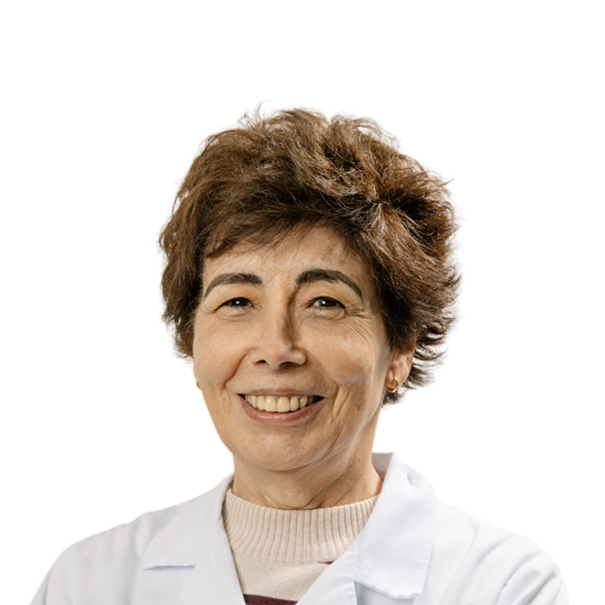
Professor Isabel Torgal is a nationally recognized figure in Gynecology, Obstetrics, and Reproductive Medicine. She graduated in Medicine from the Faculty of Medicine, University of Coimbra, in 1972, specialized in Gynecology and Obstetrics in 1980, and later became a subspecialist in Reproductive Medicine, joining the Coordination Council for Reproductive Medicine of the Portuguese Medical Association in 1998. She earned her PhD in Gynecology in 1992 at the same institution, with the theses “Human Oocyte Meiosis – Regulatory Factors” and “Cytogenetics and Infertility.” She developed a remarkable academic career at the Faculty of Medicine, University of Coimbra, between 1992 and 2016, serving as Professor and Chair of Gynecology, alongside her clinical work at the Centro Hospitalar e Universitário de Coimbra, where she worked from 1980 to 2016 and directed the Gynecology Department until her retirement.
A pioneer in Medically Assisted Procreation (MAP) in Portugal, she has worked in this field since 1985 and was part of the team that founded the Reproductive Medicine Studies Unit at the University Hospitals of Coimbra. She contributed to the first MAP-assisted birth in Coimbra in 1988 and established the Cytogenetics Laboratory of the Gynecology Department between 1983 and 1989. Her career includes advanced training in leading international centers in Israel, France, and Denmark, consolidating her expertise in embryology, endocrinology, and in vitro fertilization techniques.
Throughout her career, she has held numerous significant institutional roles. She served as President of the Portuguese Society of Reproductive Medicine from 1996 to 1999, Vice-President of the same society in multiple terms, Vice-President of the Portuguese Society of Gynecology, and is currently a member of the Technical Council of the Portuguese Society of Reproductive Medicine, participating in all its boards since its inception. She has represented Portugal in international organizations such as the European Board and College of Obstetrics and Gynecology, the International Federation of Fertility Societies, and the European Board and Royal College of Obstetrics and Gynecology in London. She has also collaborated as a consultant for the World Health Organization in evaluating hospital units in Cape Verde and served on examination juries of the Portuguese Medical Association in Gynecology and Obstetrics.
Professor Torgal has an extensive scientific and academic output: she has supervised numerous Master’s and PhD theses, coordinated multiple research projects, and delivered over 600 lectures and scientific presentations in Portugal and abroad. She is the author or co-author of more than 200 articles published in national and international journals, contributed to several medical books, and authored “Physiology of the Ovary” (Fundação Schering Lusitana, 2004). She has participated on editorial boards and served as a scientific reviewer for leading journals such as Fertility and Sterility, Revista Iberoamericana de Fertilidad y Reproducción Humana, Revista da Sociedade Portuguesa de Ginecologia e Medicina da Reprodução, and Acta Obstétrica e Ginecológica Portuguesa.
In 2002, she founded Ferticentro, where she has served as Clinical Director since then. Under her leadership, the clinic introduced several innovations in Portugal, including the embryo culture system – Embryoscope (2013) and an automated sample traceability system (2015). She also established the country’s first private Gamete Bank in 2019. Ferticentro has achieved several pioneering milestones under her guidance in the Central Region of Portugal, such as pregnancies through cryopreserved embryo transfer, various testicular biopsy techniques, IVF treatments with gamete and embryo donation, preimplantation genetic diagnosis for monogenic diseases and structural rearrangements, aneuploidy screening, oocyte and embryo vitrification, MAP techniques for HIV-positive couples, and reciprocal IVF for female couples.
Her humanistic, scientific, and clinical career makes Professor Torgal one of the most influential figures in the development of Reproductive Medicine in Portugal. She continues to play an active role in advancing the field and advocating for quality and innovation in care provided to families.
Ferticentro was created to unite Gynecology and Reproductive Medicine in one dedicated space. It was a structure I was missing in order to be able to follow my patients with the quality and continuity I desired. Over the years, I came to understand that only a center designed from the ground up, with specialized teams and cutting-edge technology, could truly provide integrated, highly specialized care, from the initial gynecological evaluation to the most advanced fertility treatments.
Professor Isabel Torgal

Testimonials
Patient Testimonials
“We have had an amazing experience at Ferticentro, we welcomed our second daughter in 2018 through Reciprocal IVF. We are now 12 weeks pregnant with our third child and cannot thank Professor Isabel and the whole team enough. They are angels! Thank you thank you!”

“Ferticentro is a really great team. Prof Isabel Torgal had a good treatment plan for us and found the best way to get a result. Maria helped us to connect effectively. Dr Nisa Félix did egg retrieval, not much blood and recovery soon for the patient, and her caring action (touch the check) before egg retrieval helped to reduce stress and feeling caring. Nurse Sara is humorous and warm to take care of the patient. And of course, the lab team works effectively and Dr Livia keeps in contact with us day by day. Now we have a 31 week-pregnancy boy. Very recommended for same-sex couples to have children in Portugal and especially Ferticentro.”
“We had a great experience with Ferticentro.
The communication was clear, the clinic was in fantastic condition, everything felt new, clean, and most of all every single member of staff we had contact with, from the initial contact to the doctors to the reception staff, to the embryologists, were fantastic.
I wanted to give a special shout out to my favourite people, the nurses. They are kind. Empathetic, gentle and caring. We felt so well cared for by Catia, Barbara and the whole nursing team (I wished I could remember more names!)
We are currently 13 weeks pregnant with our first attempt of reciprocal IVF. As a same sex couple I never once felt like we were treated or handled differently than anyone else, single or partnered, in the clinic.
I would highly recommend Ferticentro for fertility treatment.”
“Thank you for helping me to finally make my dream come true.”
“Fantastic service from start to finish. Staff were so warm, friendly and reassuring. They responded to messages quickly and always made me feel totally confident and safe in their care. Would highly recommend.”
“After a lot of research and a failed experience with another clinic, Ferticentro turned out to be the best choice for me. Even before I became their patient, they took the time to explain all my options and helped me find the best solution, especially as an international patient with time constraints. Throughout the entire process, they made me feel comfortable and supported. From the front desk staff to the nurses and doctors, everyone was thorough, transparent, and genuinely cared. They responded promptly to all my questions, and I always felt like I was in good hands. Initially, I had some hesitation since the clinic isn’t as modern as others I visited, but it was impeccably clean. On the day of my egg retrieval, I had my own spotless room, and everyone was so kind and reassuring. They made a difficult and personal procedure feel much less daunting, even though I was going through it alone and had never been under anesthesia before. Ferticentro is great at accommodating international patients, both with timelines and financial concerns. If you’re considering egg freezing, I highly recommend this clinic. Even if you’re staying in Lisbon, it’s just a 1.5-hour train ride to Coimbra. I only wish I had started with them from the beginning. The staff and clinic are incredible.”